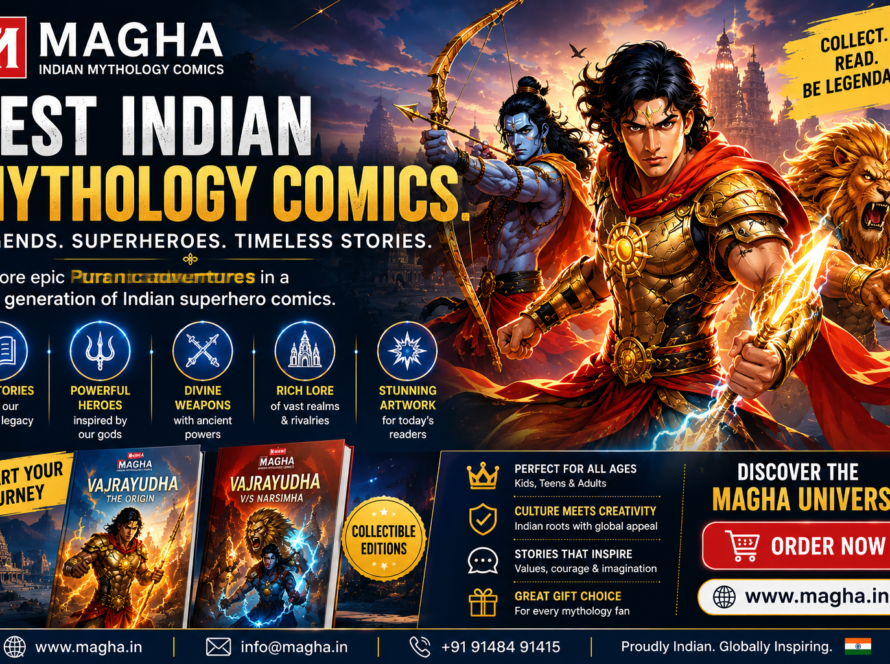
Indian mythology has always contained the building blocks of unforgettable superhero storytelling: extraordinary powers, morally complex characters, celestial weapons, ancient conflicts, powerful realms and larger-than-life consequences.
For generations, Puranic stories have been shared through oral traditions, temple art, regional theatre, television, books and family conversations. Today, a new generation of creators is bringing that energy into graphic storytelling. Indian mythology comic books are using familiar cultural references as the foundation for original, cinematic and character-led universes that can connect with modern readers.
The opportunity is not to simply retell ancient stories page by page. It is to respectfully reimagine their themes, symbols and archetypes for contemporary audiences who enjoy action, fantasy, science fiction, superheroes and long-form visual storytelling.
Why Indian Mythology Is Perfect for Comic-Book Storytelling
Comic books need strong visual worlds. They need memorable characters, dramatic stakes, distinctive powers and conflicts that can grow across multiple issues or series.
Indian Puranic traditions already offer a rich source of inspiration.
There are celestial weapons with deep symbolic meaning, divine and demonic forces, battles between dharma and adharma, transformations, curses, boons, alternate realms and heroes who must make difficult moral choices. These themes naturally translate into the visual language of comics.
A mythology-inspired comic universe can draw from ancient source material while creating a new setting, new protagonists and new conflicts. A weapon may become the source of a modern character’s power. A legendary force may reappear in a contemporary city. A battle between ancient beings may continue through present-day identities.
This is why mythology inspired superheroes can feel both familiar and fresh. Readers recognise the cultural roots, but they also discover a new narrative built for the way people consume stories today.
Reimagining Puranic Characters for Modern Readers
The strongest mythology-based comics do not depend only on nostalgia. They create characters with motivations, weaknesses, relationships and choices that modern readers can understand.
A powerful character should have more than a divine weapon or supernatural ability. Readers want to know what that character fears, what they are willing to sacrifice and how they respond when power creates consequences.
For example, a modern character inspired by a Puranic force may face present-day challenges such as crime, corruption, inequality, identity, grief, loyalty or survival. The mythology becomes the deeper layer of the story, while the character’s journey remains emotionally relatable.
MAGHA’s approach to Indian mythology-inspired comic characters shows how ancient references can become the basis for a connected superhero universe rather than remaining limited to historical retellings.
Weapons, Powers and Lore Create Stronger Comic Universes
One reason Indian mythology comic books can become highly engaging is the depth of their lore.
Weapons in Puranic stories are not only tools for battle. They often carry identity, responsibility, purpose and consequence. A divine weapon may test the person who uses it. A power may be tied to a duty. A boon may create a weakness that shapes the entire conflict.
This gives comic creators an opportunity to build detailed story worlds around:
- Ancient weapons and their origins
- Lost knowledge, hidden realms and secret lineages
- Rival factions shaped by old conflicts
- Human characters connected to supernatural forces
- Moral dilemmas around power and responsibility
- Modern cities affected by mythological events
- Crossovers between heroes, villains and parallel storylines
When these elements are handled well, readers do not only follow one hero. They want to explore the entire universe.
This is the same reason global superhero franchises have created lasting audiences. A well-designed universe allows each character to carry a separate story while still contributing to a larger conflict.
Ancient Themes Can Address Modern Questions
The most powerful mythology-based storytelling is not about copying the past. It is about using timeless themes to ask meaningful questions in the present.
Many Puranic stories explore duty, justice, sacrifice, power, loyalty, ambition, anger, family, destiny and the consequences of choice. These ideas remain relevant to modern audiences.
A comic book can use mythology-inspired conflict to explore questions such as:
- What happens when power falls into the wrong hands?
- Can a person escape the legacy they inherit?
- Is strength enough without discipline or compassion?
- What does justice look like in a flawed world?
- How do people respond when ancient forces enter modern life?
- Can a hero protect others without losing their own humanity?
This depth gives Indian superhero comics the ability to entertain younger readers while also attracting teenagers and adults who want stories with cultural layers and emotional stakes.
Puranic Stories for Kids Need Imagination and Care
Parents, educators and young readers are increasingly looking for Puranic stories for kids that are engaging without becoming overly complicated or disconnected from modern interests.
Comic books can offer an effective format because visual storytelling makes complex worlds easier to enter. Children can understand characters, symbols and conflicts through action, dialogue and imagery rather than only through long text-based explanations.
At the same time, responsible creators should be careful when adapting stories with religious and cultural significance. The goal should be to create original entertainment inspired by mythology, not to present fictional reinterpretations as religious canon.
A thoughtful comic universe can introduce young readers to ideas from Indian culture while encouraging curiosity, imagination and a deeper interest in the stories that inspired the characters.
Building a New Generation of Indian Superhero Comics
For many years, global comic audiences have grown up with heroes from American, Japanese and European storytelling traditions. Indian creators now have a major opportunity to build characters who are visually exciting, culturally grounded and globally understandable.
The future of Indian superhero comics can include stories that move across comic books, animation, games, films, merchandise, digital experiences and collectibles.
To make this possible, creators need more than a good character design. They need a consistent universe with rules, backstories, visual identity, story arcs and a long-term publishing plan.
MAGHA describes its wider vision as a mythology-rooted entertainment universe designed to bring ancient cultural inspiration into character-based storytelling for audiences in India and beyond. Readers can learn more about the MAGHA comic-universe vision and its focus on developing original superheroes through comics and entertainment.
A Modern Example of Mythology-Inspired Character Design
A mythology-rooted hero becomes compelling when the inspiration is clear but the character still has an original identity.
For example, a contemporary character may carry echoes of a powerful goddess, weapon or ancient conflict while living in a completely different world. Their abilities, personal history, moral choices and enemy relationships can be built specifically for the new comic universe.
MAGHA’s Kali-inspired superhero narrative illustrates this kind of creative direction, where a modern character faces conflict with destructive forces while drawing inspiration from the symbolic power associated with Goddess Kali.
This approach gives creators room to build original heroes, villains and interconnected storylines while maintaining a meaningful connection to Indian cultural imagination.
Why Mythology-Based Comics Can Have Commercial Potential
Indian mythology comic books can appeal to several audiences at once. Younger readers may enjoy the action and visual adventure. Teenagers may connect with the characters and larger fictional universe. Adults may appreciate the cultural references, layered lore and modern interpretation.
This gives mythology-rooted comics commercial potential across multiple formats, including:
- Print comic books and graphic novels
- Digital comics and subscription platforms
- Animated shorts and web series
- Character merchandise and collectibles
- Mobile games and interactive storytelling
- School and family reading experiences
- Film, television and streaming adaptations
The strongest opportunities come when creators think beyond a single comic issue. A well-developed universe can create long-term intellectual property that grows through multiple characters, stories and platforms.
Storytelling and Audience Building Matter
Creating an original comic universe is only the first step. The next challenge is helping readers discover the characters, understand the story world and become invested in what comes next.
Comic studios need strong visual branding, trailers, character introductions, social content, creator interviews, teaser art and community engagement. Fans are more likely to follow a universe when they can understand its identity and feel part of its growth.
A professional brand storytelling strategy for entertainment properties can help comic creators present their universe more clearly, build anticipation around new characters and create a stronger audience connection across digital platforms.
Conclusion
Indian mythology comic books are creating a powerful bridge between ancient storytelling traditions and contemporary superhero entertainment.
By drawing inspiration from Puranic characters, weapons, conflicts and themes, creators can build original universes that feel culturally rooted while still offering the pace, action and imagination modern readers expect.
The future of mythology-inspired superheroes is not limited to retelling the past. It lies in creating new heroes, new worlds and new stories that allow India’s timeless narrative traditions to reach a new generation of readers.